
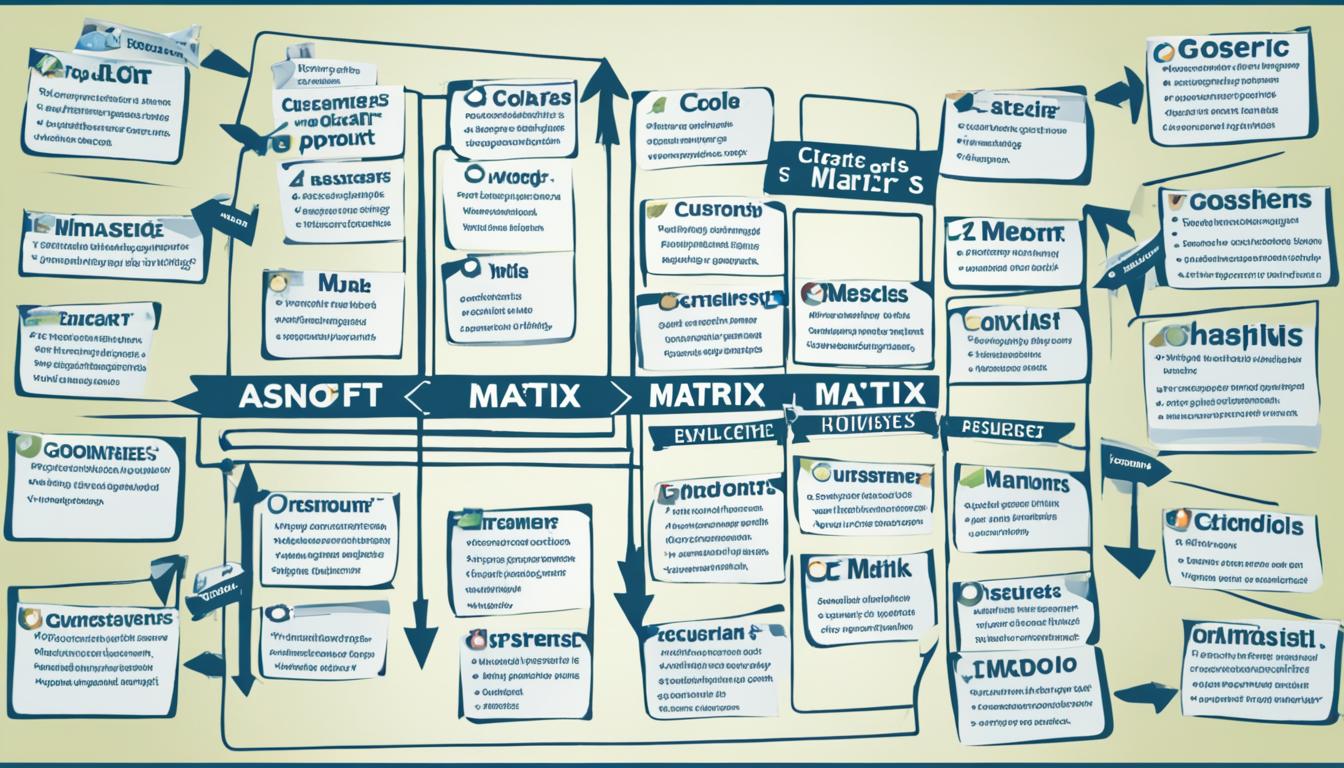
Have you ever wondered how successful businesses navigate the complex landscape of growth and expansion? How do they identify the right strategies to fuel their growth and stay ahead of the competition? The answer lies in the Ansoff Matrix. But what exactly is the Ansoff Matrix, and how can it help businesses achieve their growth goals?
The Ansoff Matrix, also known as the Product/Market Expansion Grid, is a strategic framework developed by H. Igor Ansoff in 1957. It provides businesses with a structured approach to plan and evaluate their growth initiatives. By categorizing potential strategies based on the combination of existing and new products and markets, the Ansoff Matrix helps businesses make informed and effective decisions.
But what are the four quadrants of the Ansoff Matrix, and how do they differ in terms of risk and potential reward? In this article, we will explore each quadrant of the Ansoff Matrix in detail and analyze their applications and examples. Whether you’re a business owner, marketer, or strategist, understanding the Ansoff Matrix will equip you with the knowledge and tools to drive sustainable growth.
Key Takeaways:
- The Ansoff Matrix is a strategic framework developed by H. Igor Ansoff in 1957 to help businesses plan and evaluate growth initiatives.
- The Matrix consists of four quadrants: Market Penetration, Market Development, Product Development, and Diversification.
- Each quadrant presents different levels of risk and potential reward, offering businesses a range of growth strategies to choose from.
- Market Penetration focuses on selling more of existing products to existing markets, while Market Development aims to sell existing products to new markets.
- Product Development involves introducing new products to existing markets, and Diversification explores entering entirely new markets with new products.
Market Penetration Strategy
Market Penetration is the least risky growth strategy in the Ansoff Matrix. It involves increasing sales of existing products within the existing market. Businesses can pursue market penetration by implementing strategies such as:
- Increasing marketing efforts: This can include advertising campaigns, social media promotions, and targeted marketing initiatives to increase brand visibility and attract more customers.
- Streamlining distribution processes: By optimizing supply chains, improving logistics, and enhancing distribution networks, businesses can ensure their products reach customers more efficiently and with greater speed.
- Reducing prices: Offering discounts, introductory pricing, or promotional offers can incentivize customers to choose a company’s products over competitors, leading to increased market share.
- Acquiring competitors in the same market: Mergers or acquisitions allow businesses to eliminate competition, expand their customer base, and gain access to new distribution channels or technologies.
For example, a consumer packaged goods business may amend pricing for a large retail chain to secure more shelf space for its products. Market penetration aims to leverage existing relationships and familiarity with the market to drive sales growth.

Implementing a market penetration strategy can help businesses capitalize on their existing products and customer base while maximizing profits. This growth approach minimizes the risk associated with entering new markets or developing new products, making it an attractive option for businesses seeking incremental growth opportunities.
Market Development Strategy
Market Development is a growth strategy that focuses on selling existing products to new markets. This strategy involves expanding into different geographic regions, targeting new customer segments, or entering foreign markets.
Businesses can pursue market development by adapting their marketing strategies, exploring new distribution channels, or even considering franchising opportunities. By capitalizing on their existing products and proven roadmaps, businesses can minimize risks while tapping into the potential of new markets.

A great example of market development is the sports brand Lululemon. By aggressively expanding into the Asia Pacific market, Lululemon aims to sell its popular athleisure products to a whole new set of customers. This strategy allows Lululemon to leverage its existing products and brand presence while exploring new opportunities for growth.
Market development carries a moderate level of risk, but it also offers businesses the chance to expand their reach and tap into untapped markets. By carefully analyzing market trends, consumer needs, and competitive landscapes, businesses can develop effective market development strategies that maximize growth potential.
Product Development Strategy
Product Development is a powerful growth strategy that allows you to expand your business in existing markets by introducing new and innovative products. By focusing on creating fresh offerings, you can leverage brand loyalty and increase your share of the market.
Investing in research and development (R&D) is crucial for product development. It enables you to continually innovate and stay ahead of the competition. Whether you choose to develop new products in-house, acquire the rights to sell complementary items from other firms, or explore white-label branding, the goal is to provide your existing customers with exciting options.
For example, a well-established beauty brand that caters to women aged 28-35 might venture into developing a new line of hair care products. By listening to their target market and conducting thorough market research, they can meet the specific needs and preferences of their existing customers, enhancing their overall satisfaction.
FAQ
What is the Ansoff Matrix?
What are the four quadrants of the Ansoff Matrix?
What is Market Penetration?
What is Market Development?
What is Product Development?
What is Diversification?
What are the risks associated with Market Penetration?
What are the risks associated with Market Development?
What are the risks associated with Product Development?
What are the risks associated with Diversification?
How can businesses pursue Market Penetration?
How can businesses achieve Market Development?
How can businesses pursue Product Development?
How can businesses pursue Diversification?
Source Links
- https://corporatefinanceinstitute.com/resources/management/ansoff-matrix/
- https://www.cascade.app/blog/the-ansoff-matrix-helps-organizations-grow
- https://www.thepowermba.com/en/blog/ansoff-growth-matrix